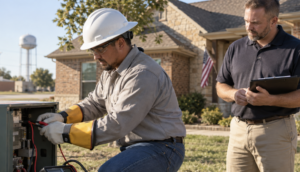
🏠 Real estate safety involves much more than roofs, foundations, plumbing, and visible building conditions. Across Oklahoma, electrical systems and the equipment used around energized environments are an important part of protecting properties, businesses, contractors, and employees. In Duncan, where commercial properties, industrial facilities, construction operations, service companies, and energy-related businesses are part of the local economy, electrical safety can have a direct impact on both people and property.
Dielectric testing is one part of that safety picture. The testing is used to evaluate whether certain insulating materials, protective equipment, tools, and components can withstand electrical voltage without allowing dangerous current to pass through them. When equipment is expected to provide a barrier between a worker and electrical energy, its insulating qualities need to remain dependable.
For Oklahoma property owners and businesses, this makes dielectric testing more than a technical procedure. It can become part of a broader approach to property maintenance, workplace safety, risk management, and responsible operations.
Duncan’s Real Estate Landscape Includes More Than Residential Property
Duncan is the county seat of Stephens County and has a long history connected with agriculture, petroleum, energy, business development, and industry. The city’s economic background has helped create a real estate market that includes homes, offices, retail locations, industrial properties, service facilities, warehouses, and properties connected with energy and construction operations. The history and development of the community are outlined in the Wikipedia overview of Duncan, Oklahoma.
That diversity matters when discussing property safety. A residential buyer may focus on the electrical panel, outlets, wiring, and condition of a home’s major systems. A commercial or industrial property can introduce an entirely different range of concerns, particularly when employees use electrically insulated equipment or work in environments where exposure to electrical hazards is possible.
Official demographic and housing information available through the U.S. Census Bureau’s Duncan QuickFacts page also provides useful context for understanding the community and its housing base. Reliable public information is increasingly important for Oklahoma real estate professionals, investors, property owners, and businesses evaluating communities throughout the state.
⚡ Electrical safety becomes especially important when a property is not simply occupied, but actively used as a workplace.
Dielectric Testing Helps Verify Electrical Insulation
Dielectric testing generally involves applying a controlled electrical voltage to equipment or insulating materials to determine whether the insulation can perform as intended. Depending on the equipment being evaluated, testing may help identify deterioration, contamination, damage, or weaknesses that are not immediately apparent during an ordinary visual inspection.
Businesses looking for professional Dielectric Testing Duncan OK services may use testing as part of an established inspection and safety program for equipment that must provide electrical insulation.
The principle behind this type of testing is straightforward. Electrical protective equipment is valuable only when it continues to provide the insulation expected of it. Equipment can appear usable from the outside while its protective capabilities have been reduced by age, exposure, physical damage, improper storage, contamination, or repeated use.
Testing gives companies another way to evaluate protective equipment before relying on it in an environment where failure could have serious consequences.
Electrical Hazards Can Affect Workers and Property
Electrical incidents are not limited to electricians. Employees in construction, property maintenance, utility work, industrial operations, telecommunications, equipment service, and other occupations can encounter energized electrical systems during normal work.
The Occupational Safety and Health Administration’s electrical safety resources identify electrical hazards as a serious workplace concern and address dangers that include electric shock, electrocution, fires, and explosions. OSHA also identifies methods such as insulation, guarding, grounding, protective devices, and safe work practices as ways of controlling electrical hazards.
For property owners, electrical safety also has a financial dimension. Electrical failures can damage equipment, interrupt operations, create fire risks, shut down work areas, and contribute to costly repairs. A serious event at a commercial property can affect employees, tenants, contractors, customers, and the physical building itself.
This is why electrical safety should be considered part of property risk management rather than treated exclusively as an equipment issue.
Commercial Real Estate Depends on Safe Working Environments
Commercial property has a different set of demands from an ordinary residence. A building may contain offices, machinery, maintenance operations, loading areas, service departments, electrical equipment, or specialized systems used by tenants and employees.
Property owners and managers often spend significant time considering roofing systems, HVAC equipment, accessibility, security, insurance, structural maintenance, and fire protection. Electrical safety deserves a place within that same conversation.
The Oklahoma Department of Labor maintains programs and resources related to workplace safety, occupational licensing, consultation, and worker protections throughout Oklahoma. The department’s focus on safe and healthy workplaces reinforces the connection between responsible business operations and the environments in which Oklahomans work.
A business operating from a well-maintained building can still face risks when protective equipment is damaged or electrical safety procedures are neglected. Property condition and workplace practices ultimately work together.
Construction and Property Improvements Create Additional Electrical Risks
Oklahoma real estate is continually changing. Buildings are remodeled. Commercial spaces are converted for new tenants. Warehouses are expanded. Roofing and exterior improvements are completed. Electrical systems are upgraded. New equipment is installed.
Each project can bring workers into areas where electrical systems are present.
OSHA’s construction requirements address employee protection around electrical circuits. The agency’s rules call for precautions when work may place an employee near energized electrical components, including deenergizing, grounding, guarding, or insulation where appropriate. The relevant requirements can be reviewed through OSHA’s electrical construction safety standard.
For real estate owners, developers, contractors, and facility managers, this highlights the importance of looking beyond the finished property. Safety during construction, renovation, repair, and ongoing maintenance is also part of responsible property management.
Dielectric testing can support that larger safety culture by helping ensure that equipment intended to protect workers around electrical hazards continues to perform properly.
Preventive Maintenance Can Protect Long-Term Property Value
Preventive maintenance often receives less attention than emergency repairs because successful maintenance prevents an event from happening in the first place.
A leaking roof is obvious. A failed air-conditioning system quickly attracts attention. A broken pipe demands immediate action. Deteriorating electrical protective equipment may provide fewer visible warnings.
That difference makes scheduled inspection and testing particularly valuable.
For commercial and industrial property owners, preventive safety procedures may contribute to greater operational reliability. Properly maintained equipment can reduce unexpected disruptions and help businesses create more consistent maintenance records. Documentation can also provide valuable historical information when equipment is evaluated, replaced, reassigned, or incorporated into a broader safety program.
The concept aligns with the larger goal of preserving useful, productive properties. The Oklahoma Department of Commerce provides information on business development, available buildings and sites, community resources, and economic growth throughout Oklahoma. Healthy commercial real estate and dependable business infrastructure are closely connected to the state’s ability to attract and retain employers.
Safe operations support that environment.
Real Estate Professionals Benefit From Understanding Property Safety
Real estate agents are not electrical engineers, safety inspectors, or dielectric testing professionals, and they should not attempt to replace qualified specialists. However, understanding the major issues affecting commercial and industrial properties can make real estate professionals more knowledgeable when serving buyers, sellers, landlords, tenants, and investors.
Oklahoma REALTORS® provides education, industry information, legal guidance, advocacy, and resources for real estate professionals throughout the state. Its Oklahoma REALTORS® industry resource center emphasizes the importance of connecting statewide and national industry developments with local real estate conditions.
That broader knowledge becomes especially useful in communities where residential, commercial, industrial, agricultural, and energy-related properties exist side by side.
A real estate professional working with a manufacturing facility, service operation, warehouse, utility contractor, or industrial buyer does not need to personally perform technical testing. Recognizing that specialized electrical safety requirements exist, however, can help create better conversations among buyers, property owners, contractors, facility managers, and qualified testing professionals.
Testing Supports a Stronger Culture of Workplace Safety
The greatest value of dielectric testing is not found in a report sitting in a file. Its value comes from helping organizations make better decisions about equipment and worker protection.
Electrical protective equipment is often one part of a larger safety system that can include employee training, hazard assessments, equipment inspections, documented procedures, maintenance schedules, personal protective equipment, and compliance with applicable standards.
Oklahoma’s workplace safety resources reinforce this broader approach. The Oklahoma Department of Labor Safety and Health Division provides consultation, outreach, education, licensing, and other programs designed to support safer workplaces across the state.
When businesses treat testing as part of an ongoing safety program rather than a one-time task, it becomes easier to identify potential problems before equipment is placed into service.
That can matter greatly in environments where the consequences of insulation failure extend far beyond replacing a damaged tool.
Safer Workplaces Strengthen Oklahoma Communities
A commercial building is more than an address. It may be where dozens or hundreds of people earn their living. It can house a family-owned company, a growing contractor, a regional service provider, an industrial operation, or a business that has served a community for generations.
Protecting those workplaces supports employees and property owners at the same time.
Safety investments can also contribute to the long-term usefulness of Oklahoma’s commercial real estate inventory. Businesses need buildings that allow them to operate efficiently, maintain equipment, protect workers, and adapt as their operations change. Properties that support responsible operations can remain productive assets within their communities for years.
For Duncan, this is particularly relevant because the city’s history has long connected real estate with business, energy, industry, and skilled work. Maintaining safe facilities helps preserve that connection while supporting future economic activity.
Conclusion
🏠 Oklahoma real estate safety extends well beyond what buyers can see during a walk-through. Behind the walls, inside electrical systems, around industrial equipment, and within everyday workplace procedures are safety considerations that can affect both people and property.
Dielectric testing plays a specialized but important role by evaluating equipment and materials that are expected to provide electrical insulation. For businesses where employees may encounter electrical hazards, dependable protective equipment can be an essential part of a broader workplace safety program.
In Duncan, commercial and industrial properties remain important pieces of the local economy. Protecting those properties means protecting the people who work inside them as well. Regular inspections, appropriate testing, qualified professionals, employee training, and responsible maintenance all contribute to safer operations.
For Oklahoma property owners, employers, contractors, facility managers, and real estate professionals, attention to electrical safety represents an investment in more than compliance. It supports safer workers, better-maintained facilities, stronger businesses, and real estate that can continue serving Oklahoma communities for years to come.