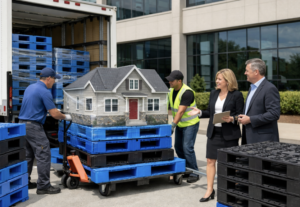
Plastic pallets solve a very real problem for real estate companies: moving, storing, and protecting the stuff that keeps listings, renovations, and day-to-day property operations running smoothly. They do it with less mess, fewer replacements, and a cleaner, more professional workflow. ✅🏡
Why “pallets” matter in real estate operations
Real estate teams do more than list homes. They stage properties, store signage, run open houses, coordinate vendor materials, manage maintenance supplies, and support renovations across multiple addresses. Even a small brokerage can end up handling a surprising amount of physical inventory: lockboxes, sign riders, brochure boxes, staging décor, paint and patch supplies, flooring cartons, landscaping materials, seasonal items, and tenant turnover essentials.
Traditional wood pallets were built for one thing: short-term shipping in rugged industrial environments. Real estate workflows are different. They happen inside garages, leasing offices, model homes, storage units, and mixed-use properties where cleanliness, moisture control, and damage prevention matter. Plastic pallets fit that reality better.
Cleaner operations that match a client-facing industry
Real estate is visual. A spotless model home, a tidy leasing office, and a well-run open house all communicate trust. Wood pallets can shed splinters, absorb spills, and collect dirt, while also leaving behind debris that feels out of place in a customer-facing environment.
Plastic pallets are easier to keep clean. They do not splinter and they do not hold onto grime the way porous wood can. When a real estate team is storing staging items in a climate-controlled space, or staging supplies in a garage before a showing, plastic pallets help keep everything looking and feeling more professional.
Moisture control that protects high-value materials
Moisture is a silent budget killer. Cardboard boxes soften, paint cans rust, flooring cartons warp, and textiles pick up musty odors. Many real estate companies store supplies in garages, sheds, basements, or on-site maintenance rooms. Those spaces can swing in humidity, especially in coastal or storm-prone markets.
Plastic pallets provide a consistent barrier between stored items and damp floors. That gap reduces the risk of wicking moisture and helps prevent costly waste, especially for materials like laminate flooring, trim, cabinet components, and staging décor that cannot be “un-warped” later.
Fewer surprises during renovations and turnovers
Renovations and turnovers move fast. Crews come and go, deliveries arrive on tight schedules, and materials get staged wherever there is space. Wood pallets can break, lose boards, or create uneven support that leads to crushed corners, shifting stacks, and damage during movement.
Plastic pallets are built for repeat handling and consistent performance. Many are designed with more uniform dimensions and load distribution, which helps protect boxed materials. That consistency matters when supplies are moved from a warehouse or storage unit to a property, then repositioned room-to-room as work progresses.
Better safety for staff, vendors, and properties
Real estate teams and vendors often move items in tight spaces: hallways, elevators, finished interiors, and landscaped areas. Splinters, protruding nails, and broken boards introduce avoidable risk. A minor injury or a scratched floor can spiral into insurance headaches and reputation damage.
Plastic pallets reduce common hazards associated with wood. They are less likely to shed sharp fragments, and many options are designed with smooth edges that are friendlier to finished surfaces. When your “job site” is also someone’s home or a luxury leasing environment, that difference matters.
Pest and contamination risk stays lower
Wood can harbor pests and is harder to sanitize fully. For property management teams storing supplies long-term, the last thing anyone wants is pest activity migrating from a storage area into a building.
Plastic pallets are non-porous and easier to sanitize. That makes them a strong fit for multi-family operators, commercial property managers, and teams supporting storage rooms that sit near tenant areas or shared building services.
Standardization across multiple locations
Real estate companies that manage many properties have one major opportunity: standardize the “back end” so every site runs the same way. Plastic pallets help create predictable storage systems and repeatable processes for supplies, signage, cleaning kits, and turnover materials.
When a maintenance lead can walk into any storage room and know exactly how inventory is stacked and accessed, the team moves faster. Faster turns mean less vacancy time, fewer scheduling delays, and better asset performance.
Sustainability and ESG alignment with market expectations
More real estate owners and operators are being asked about sustainability and operational responsibility. Tenants, investors, and institutional partners pay attention to waste reduction and repeat-use systems. Plastic pallets can support that direction because they are typically reusable for long cycles and can reduce the steady churn of broken wood pallets.
If your brand competes in markets where reputation and trust influence decisions, operational choices that reduce waste can support your broader story. For teams that track ESG metrics, reusable logistics tools can be a practical, measurable improvement.
Cost savings that show up in fewer replacements and less damage
Plastic pallets are often more expensive upfront than wood. Over time, they can be cheaper in real estate operations because they tend to last longer and reduce collateral costs like damaged materials, cleanup time, and avoidable injuries.
Real estate is a margin business. Small inefficiencies add up across dozens of turnovers, renovations, and staging cycles. When the same pallet can be used repeatedly without breaking down, the long-run math starts to favor plastic.
A better fit for modern real estate logistics and market complexity
Real estate has been operating in a fast-changing environment: supply constraints, labor pressures, rising insurance concerns, and shifting buyer and tenant expectations. Companies that run tighter operations can adapt more easily, and logistics discipline is part of that.
Staying informed on how the industry is moving helps frame these operational decisions in context. Real estate coverage from sources like Reuters Real Estate, The Wall Street Journal Real Estate, Bloomberg Real Estate, and the Financial Times Property Sector reflects how professionalized and data-driven the industry has become. Even broader background context, such as Real estate on Wikipedia, reinforces how wide the real estate ecosystem is, including operations, management, and the physical infrastructure behind transactions. 🏢📦
How real estate teams can put plastic pallets to work immediately
Plastic pallets are most valuable when they support repeatable systems, not one-off purchases. Real estate companies can start by using them in the places where damage, moisture, and mess show up most often:
-
Staging inventory storage for décor, rugs, lamps, and boxed accessories
-
Maintenance and turnover supplies in multi-family and property management operations
-
Renovation materials such as flooring cartons, trim, and fixtures
-
Signage and open-house inventory storage to keep items clean and accessible
-
Back-office and warehouse organization for teams managing multiple listings at once
When these areas run cleaner and more consistently, the rest of the business feels it. Showings run smoother, vendors waste less time, supplies last longer, and teams look more put-together in the field.
Conclusion
Plastic pallets help real estate companies operate like the modern, high-trust businesses they are. They protect materials from moisture, reduce mess in client-facing environments, improve safety, and support standardized storage across multiple properties. They also contribute to sustainability goals through long reuse cycles and less waste. In an industry where image, speed, and reliability influence revenue, upgrading something as basic as the pallet can quietly improve the entire operation. 🏡✨